Meta ads
Why we sell AI ads in packs of five (and how to test them on Meta)
One ad tells you whether one idea worked. Five ads with the same offer and five different hooks tell you which idea your buyers respond to.

Because one ad is a guess and five ads are a test.
Most small brands we meet have run exactly one video ad. It didn’t do much, and the conclusion was “Instagram ads don’t work for us”. That’s rarely the right conclusion. Usually the product was fine and the offer was fine. The first three seconds just didn’t land with the people Meta showed the ad to, and nobody got to see what a different opening would have done.
A pack of five fixes that. Here’s how we build one, and how to run it.
Why does one ad rarely tell you anything?
One ad can only tell you whether that one idea worked. If it flops, you don’t know whether the problem was the hook, the feeling, the product shot, the offer or the audience. You’ve spent the budget and learned very little.
Five ads that keep everything the same except the opening angle give you a comparison. When one holds attention and another doesn’t, the difference is the angle, and that lesson carries into every ad you make afterwards.
What should change between the five ads?
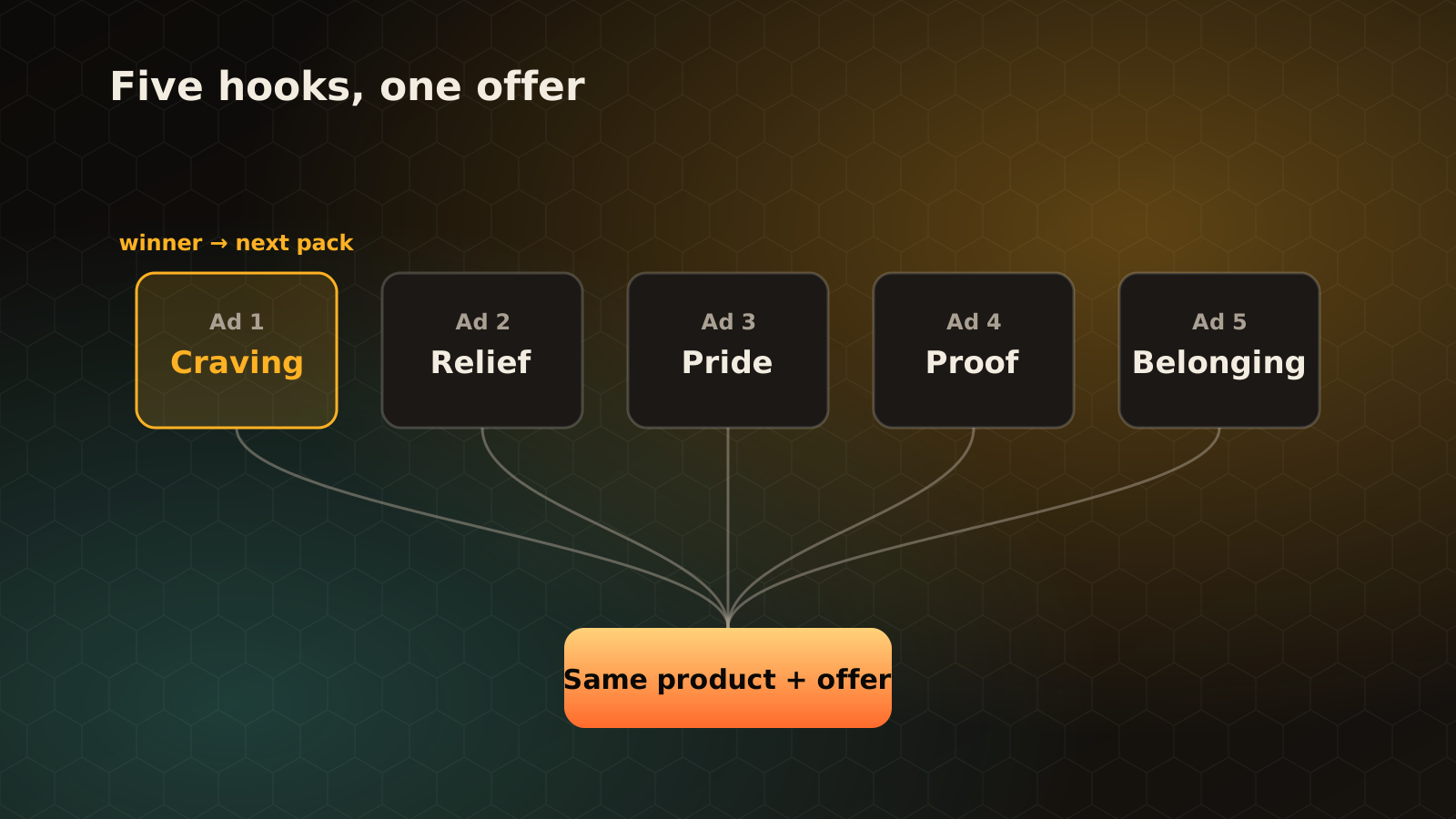
Only the angle. The product, the offer and the call to action stay exactly the same across all five, so the test is fair. Each ad opens on a different emotional reason to care.
Here’s a pack we’d write for a Chennai brand selling a ragi snack:
| Ad | Angle | Opening hook |
|---|---|---|
| 1 | Craving | A slow close-up of the crunch, sound up |
| 2 | Relief | The 4 pm office slump, and a snack you won’t regret |
| 3 | Pride | A grandmother’s recipe, now in a pack |
| 4 | Proof | The ingredient list, read out in eight seconds |
| 5 | Belonging | One pack opened on a desk, six hands reaching in |
Notice what doesn’t change: the pack shot at the end, the price, the “order now” line. Change those too and you can’t tell what made the difference.
This is the core of Honey Badger Marketing, our name for the method: find the feeling that sells, then go after it from five sides.
Which formats does Meta need?
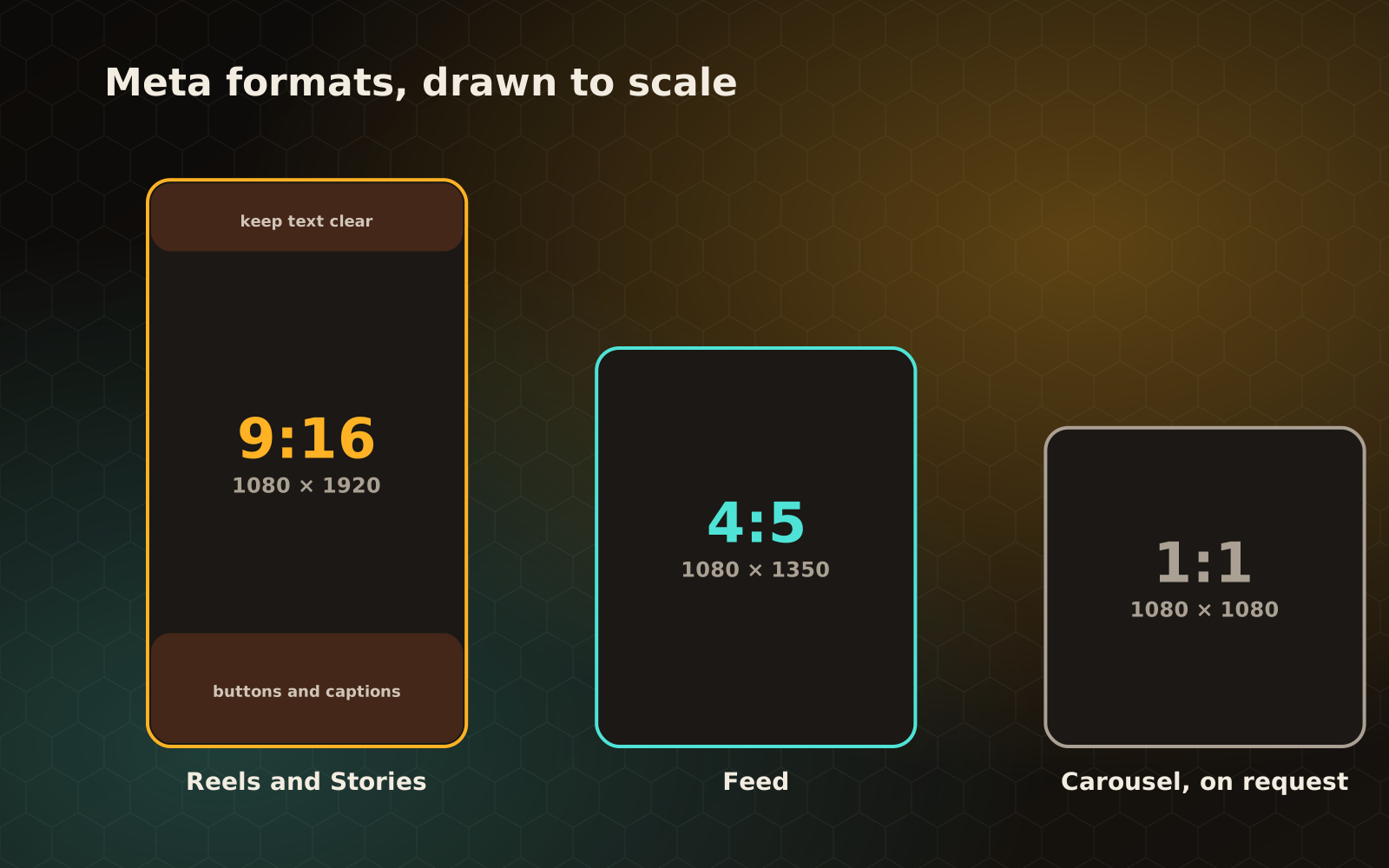
Meta video ads need a vertical 9:16 cut for Reels and Stories and a 4:5 cut for Feed. Meta’s Ads Guide lists 9:16 at 1080 × 1920 pixels as the recommended format for Reels and Stories, and spec guides built on it recommend 4:5 at 1080 × 1350 pixels for Feed, where it fills more of a phone screen than a square does.
Every Spilanth ad ships with both cuts. A few details matter as much as the ratio:
- Keep text away from the edges. In Reels and Stories, the top and bottom of the screen carry the account name, captions and buttons. Titles and prices belong in the middle.
- Write for the sound off. Plenty of people scroll with the volume down. Captions carry the message and the sound is a bonus.
- Land the hook early. The first three seconds decide whether anyone sees the rest.
How do you read the results?
Run all five ads at the same time, with the same budget, the same audience and the same objective. Then look at three numbers for each ad in Ads Manager:
- How many people watch past the opening. This tells you whether the hook works. Many advertisers divide three-second video plays by impressions and call it the hook rate.
- Click-through rate. This tells you whether the ad made someone want to know more.
- Cost per result. Purchases, leads or messages, whatever you’re optimising for. This is the number that pays the bills.
Give the test time. Judging after one day or a few hundred impressions is a coin toss, so let each ad collect enough views that the numbers stop jumping around.
When the numbers disagree, that’s useful too. If one ad has the best hook rate and another the cheapest result, one angle is good at stopping the scroll and the other at closing. The next ad can combine them.
What happens after the test?
You keep the winner running and build the next pack around it. If “Craving” held attention and “Proof” got the clicks, the next five might all open on a craving hook and end on proof, with five new ways to do it.
That’s the last step of our method, repeat the winner, and it’s how an ad account gets steadily better instead of starting from zero every month. Bring the numbers when you come back and we’ll write the next five from them.
What does a pack of five cost?
A pack of five 30-second ads of one type costs ₹19,999 for product ads, ₹33,999 for commercial ads and ₹42,999 for storytelling ads, GST included. That’s about ₹4,000, ₹6,800 and ₹8,600 per ad, or 14% to 20% less than buying five single ads.
The full list is on the pricing page, and what an AI video ad costs in India explains what sits inside each price.
Frequently asked questions
How many ad creatives should a small brand test on Meta?
Five is a practical number for a small brand: enough variety to see which angle works, and few enough that each ad gets a fair share of the budget. Keep the offer the same and change only the opening hook.
What aspect ratio should Meta video ads be?
Use 9:16 (1080 × 1920 pixels) for Reels and Stories and 4:5 (1080 × 1350 pixels) for Feed. Every Spilanth ad ships with both cuts.
What should change between test ads?
Only the angle, meaning the opening hook and the feeling it appeals to. Keep the product, offer and call to action identical so any difference in results comes from the idea.
Sources

About the author
Surya is a filmmaker and creative technologist and the founder of Spilanth Studio, an AI ads studio in Chennai that makes product, commercial and storytelling ads for brands across India. More about the studio.