Legal
Who owns an AI-generated ad in India? What your contract should say
Ownership of an AI ad comes down to the contract. Here's what Indian copyright law says, what should transfer to your brand, and what to ask before you sign.
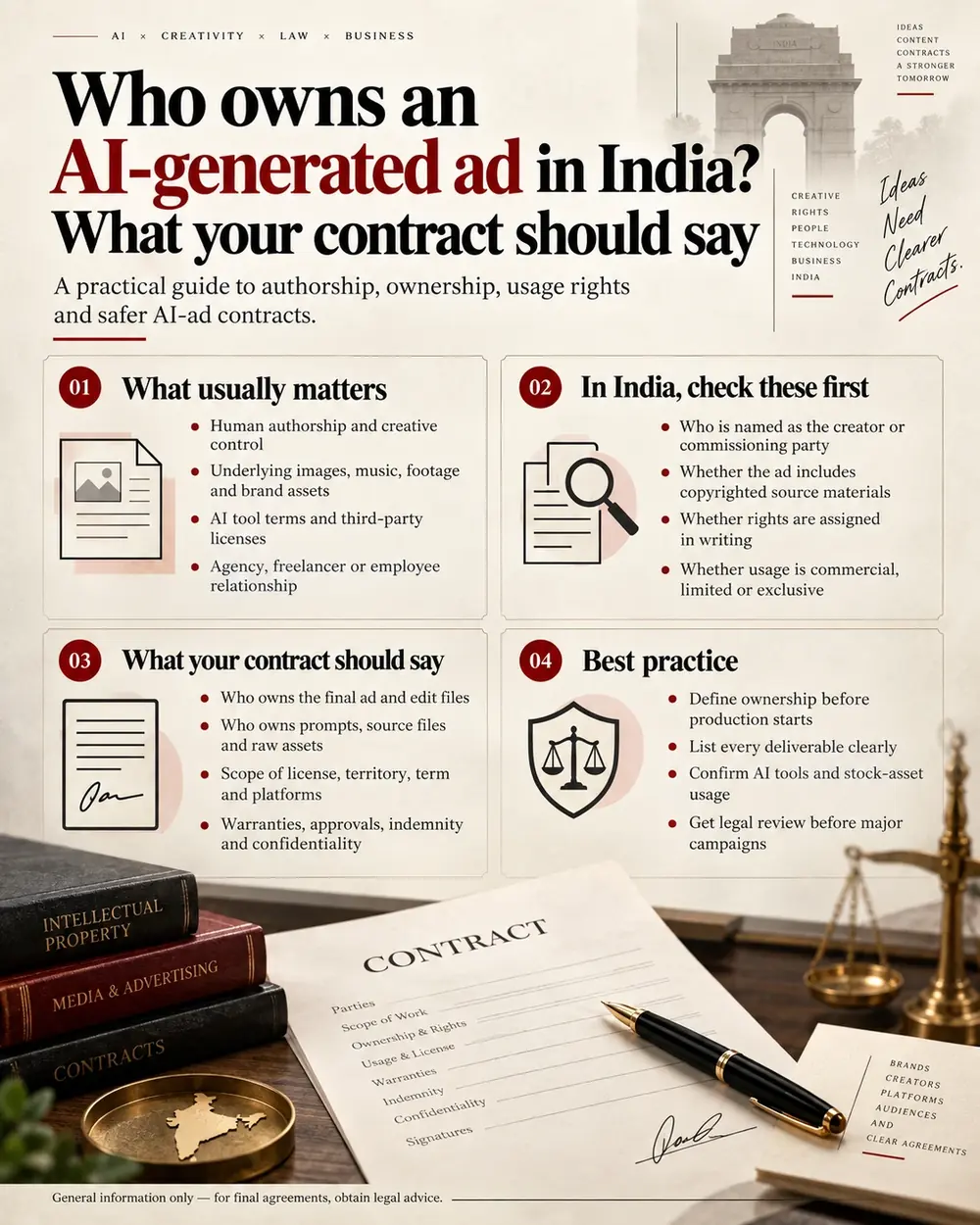
In practice, whoever the contract says owns it. That sounds like a dodge, so this article covers what Indian law actually says, what should transfer to your brand, when that should be agreed, and the questions to ask any studio before production starts.
A note before we begin: this is a production studio’s view of how to contract sensibly. It isn’t legal advice. For a large campaign or a regulated category, have a lawyer read the agreement.
Who owns an AI ad made by Spilanth Studio?
You do. Full commercial rights to the finished ad, including the master files and every format we deliver, pass to your brand in writing on final payment. You can run it on Meta, YouTube, TV, OTT and outdoor screens with no time limit.
What does Indian copyright law say about AI-generated work?
India’s Copyright Act, 1957 already has a line about computer-generated work. Section 2(d)(vi) says that for a literary, dramatic, musical or artistic work that is computer-generated, the author is “the person who causes the work to be created”.
The provision was added in 1994, long before generative AI. In August 2026, India’s Copyright Office applied it to an AI system for the first time.
What did India’s Copyright Office decide about AI authorship?
An AI system can’t be the author of a work under Indian copyright law, but a work made with AI can still be protected, with a person named as its author. That is the effect of an order dated 31 August 2026 by the Registrar of Copyrights, Prof. (Dr) Unnat P. Pandit.
The application named an AI system called DABUS as the author of an artwork, “A Recent Entrance to Paradise”. The Office found the artwork original enough to qualify for copyright. It refused DABUS as author, because an AI system isn’t a person the law recognises. Instead it held that Dr Stephen Thaler, who built DABUS, configured it and supplied its inputs, was “the person who causes the work to be created”. In the Registrar’s words, “autonomy in execution is not synonymous with conception of a work”. The application was rejected only because Dr Thaler kept naming DABUS as the author when he was given the chance to change it.
What the order doesn’t settle matters just as much for an ad. It decided one case with one applicant. It doesn’t say how authorship splits when several people shape an AI ad: the person who wrote the prompts, the director who picked the shots, the editor, the brand that approved the script.
For a brand, the takeaway is simpler. Because the law still leaves room for argument about which person is the author, the contract between you and the studio does the real work, and a specific agreement beats a vague one every time.
Why does the assignment need to be in writing?
Because Indian law says so. Section 19 of the Copyright Act says an assignment of copyright isn’t valid unless it’s in writing and signed, and that it should identify the work and specify the rights, the duration and the territory.
The detail most people miss is what happens when those last two are left out. If the period isn’t stated, the assignment is deemed to last five years from the date of assignment. If the territory isn’t specified, it’s presumed to extend only within India.
That’s the trap in an informal deal. An ad you thought you owned forever, everywhere, may legally be yours for five years in one country. Ask for the period and territory in writing: perpetual and worldwide, if that’s what you’re paying for.
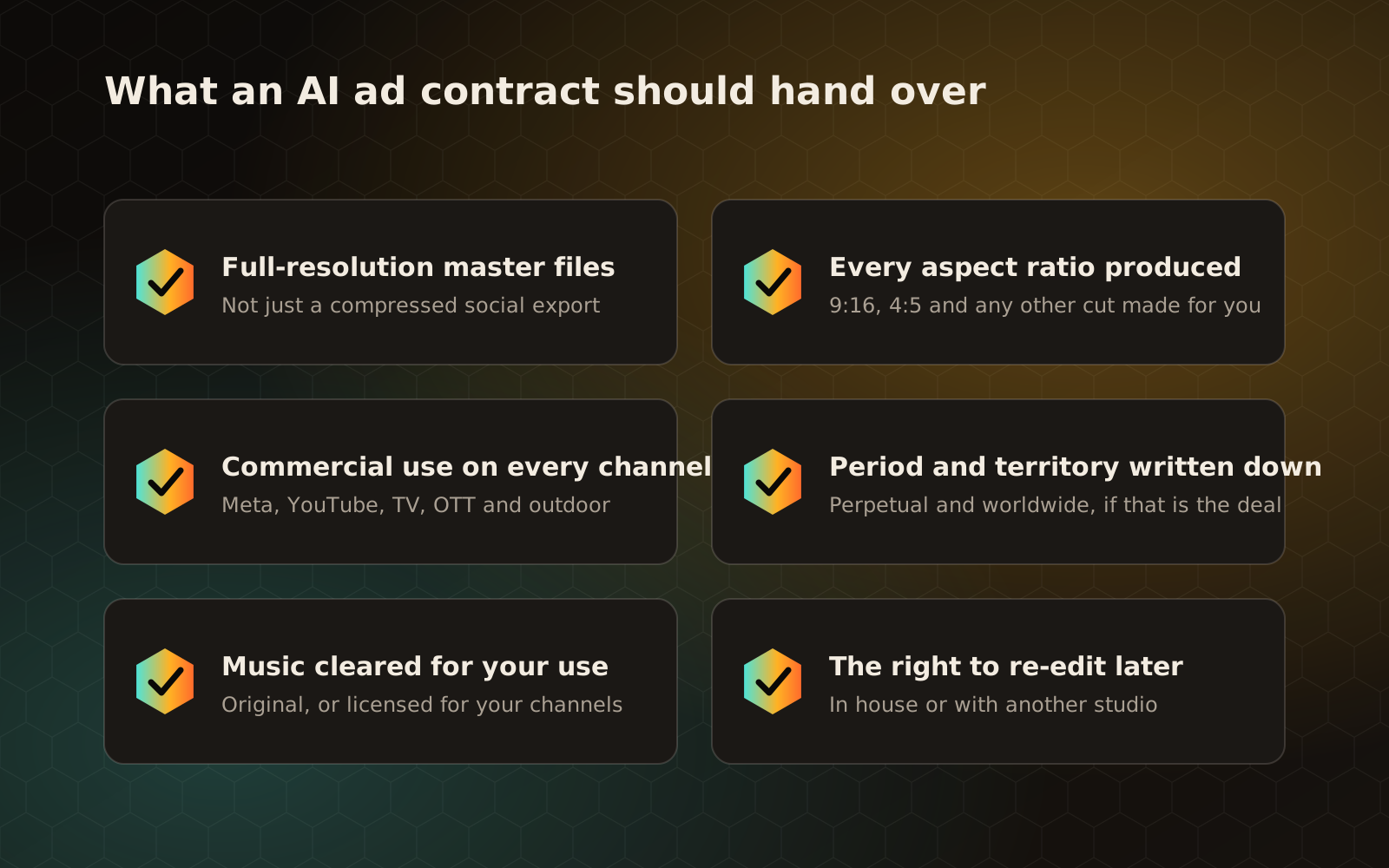
What should transfer to your brand?
- The master files. The full-resolution masters, not just a compressed social export.
- Every variant made for you. Each aspect ratio and cut-down produced during the project, so you don’t pay again for a 9:16 of an ad you already own.
- Commercial use without limits. The right to run the ad on paid and organic channels with no time limit, no per-channel fee and no renewal.
- Clarity on music. This is the most common gap. A licensed track can carry its own limits on time, territory and channel even when the film itself is fully yours. Ask whether the music is original or licensed, and for what.
- The right to re-edit. Some agreements quietly stop you cutting a new version in house or with another studio. Yours shouldn’t.
When should ownership be agreed?
Before production, not at delivery.
The worst moment in commissioned work goes like this: the ad is finished, the campaign date is close, and the terms for using it are still being negotiated. By then the brand has lost its bargaining power and the studio has lost goodwill. We confirm scope, deliverables, revision rounds and usage terms in writing before anything is generated.
What should you ask any studio before you sign?
- Does full commercial ownership transfer to us, and exactly when?
- Is the assignment perpetual and worldwide, and does the agreement say so?
- Are there channel restrictions, especially for TV, OTT and paid social?
- Is the music original or licensed, and on what terms?
- Do we get master files or only exports, and in which ratios?
- If a generated person appears, what covers that likeness?
- Can we re-edit the ad later, in house or with someone else?
A studio that hasn’t thought about question six is telling you something.
Is disclosure the same as ownership?
No. Owning an ad doesn’t settle how it has to be labelled. Platform and broadcaster rules on disclosing AI-generated or AI-assisted media keep changing and differ by channel.
Our own rule is simple: a generated presenter is never passed off as a real customer. Beyond that, check the current rules of the platform you’re buying before the campaign runs.
Where can you see our terms?
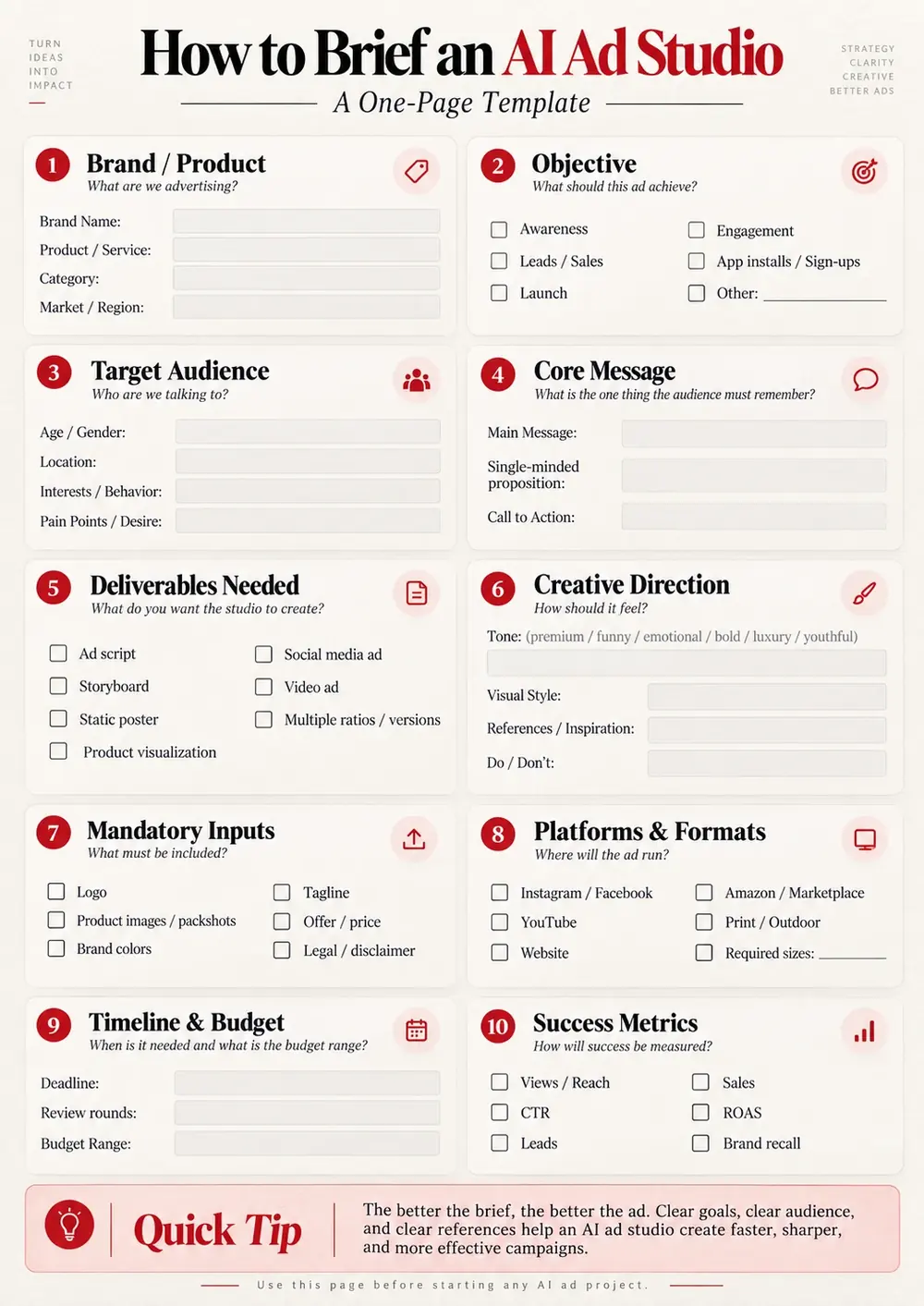
Ask for them with your brief and we’ll send the rights and deliverables in writing before you commit to anything. Prices are on the pricing page, and what an AI video ad costs in India explains what sits inside each one.
Frequently asked questions
Who owns an AI-generated commercial in India?
Ownership is decided by the agreement between the brand and the studio. With Spilanth Studio, full commercial rights pass to your brand in writing on final payment. Indian law treats the person who causes a computer-generated work to be created as its author, and in August 2026 the Copyright Office confirmed that an AI system itself cannot be the author. Which person is the author of a given ad can still be argued, so a written assignment matters.
Can an AI be the author of an ad in India?
No. In an order dated 31 August 2026, India's Copyright Office refused to register the AI system DABUS as the author of an artwork, while accepting that the work itself was original. It held that the person who caused the work to be created is the author.
What happens if the contract does not say how long the rights last?
Under Section 19 of India's Copyright Act, an assignment that does not state its period is deemed to last five years, and one that does not specify its territory is presumed to cover India only. Ask for the period and territory in writing.
Can I use an AI-generated ad on TV and OTT?
Under Spilanth Studio's terms, yes: Meta, YouTube, TV, OTT and outdoor screens. Check the current AI disclosure rules of each channel before the campaign runs.
Sources
- Authorship of AI is a legislative prerogative: Copyright Office on DABUS, SCC Online
- AI-generated work can get copyright but AI system cannot be author: Indian Copyright Office, Bar and Bench
- Section 2(d) in The Copyright Act, 1957, Indian Kanoon
- Section 19 in The Copyright Act, 1957, Indian Kanoon
- AI-Generated Content and the Copyright Act, 1957: Is There a Gap in Indian Law?, Khurana & Khurana

About the author
Surya is a filmmaker and creative technologist and the founder of Spilanth Studio, an AI ads studio in Chennai that makes product, commercial and storytelling ads for brands across India. More about the studio.